
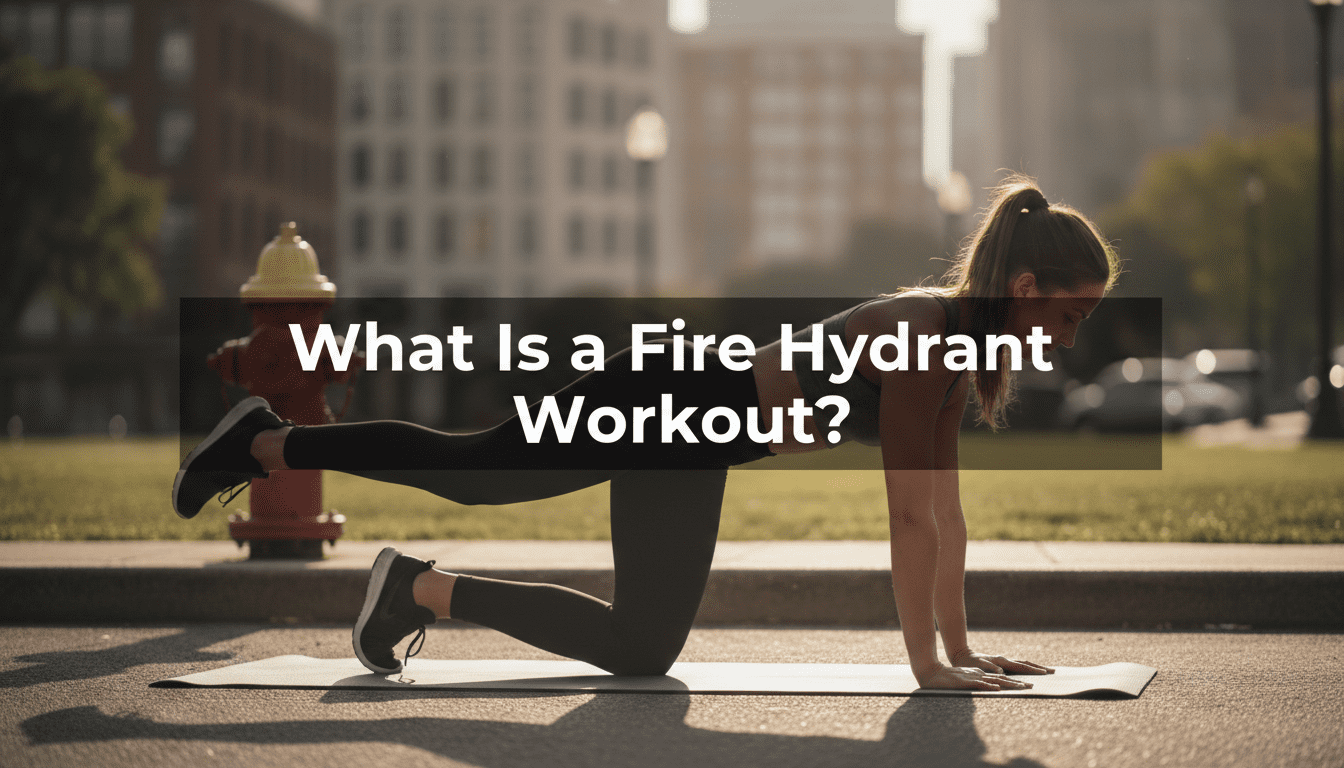
You have likely seen this move in workouts or fitness videos. It looks simple. You get on your hands and knees and lift one leg to the side. That is the fire hydrant workout.
So why do people use it so often?
Because it works. It targets your glutes, improves hip strength, and supports better movement. You do not need equipment. You can do it at home. It fits into almost any routine.
If you want stronger hips, better balance, and more control in your lower body, this exercise helps you get there.
Let’s break it down so you know exactly what to do and how to get results.
What Is a Fire Hydrant workout?
A fire hydrant exercise is a bodyweight movement that targets your hips and glutes. You start on all fours. Then you lift one leg out to the side while keeping your knee bent.
The name comes from how a dog lifts its leg near a fire hydrant. The motion looks similar.
But this is not just a funny-looking move. It trains your hip abductors. These muscles help move your leg away from your body. They also keep your hips stable when you walk, run, or squat.
You perform the movement in a controlled way. You do not swing your leg. You lift, pause, and lower it back down.
This exercise belongs to a group of glute activation movements. People often use it before heavier exercises. It wakes up your muscles so they work better during your workout.
Muscles Worked in a Fire Hydrant Workout
When you do a fire hydrant workout, you focus on specific muscles. These muscles play a big role in strength and stability.
Primary Muscles Activated
Your glutes do most of the work. The gluteus medius sits on the side of your hips. It controls hip movement and balance. This muscle works hard during the exercise.
The gluteus maximus also helps. It supports hip movement and adds power. Your hip abductors assist as well. They move your leg outward and keep your hips stable. These muscles matter. They support your knees, improve posture, and reduce injury risk.
Secondary Muscles Engaged
Other muscles help you stay stable. Your core keeps your body steady. It prevents your lower back from arching. Your lower back muscles support your posture during the movement.
Your shoulders and arms hold your upper body in place. They keep your position stable. You may not feel these muscles as much, but they work the whole time.
Benefits of Fire Hydrant Exercises
This exercise gives you more than just stronger glutes. It improves how your body moves.
Here are the main benefits you get when you add it to your routine:
- It strengthens your glutes and hips
You build strength in key muscles that support daily movement. - It improves hip mobility
You move your hips through a full range. This helps reduce stiffness. - It enhances balance and stability
Stronger hips help you stay steady when you walk, run, or train. - It supports injury prevention
Weak hips lead to knee and lower back issues. This exercise helps fix that. - It works well for home workouts
You do not need equipment. You use your body weight. - It helps with muscle activation
You can use it before workouts to wake up your glutes.
You get a lot from a simple movement. That is why trainers keep it in their programs.
How to Do a Fire Hydrant Exercise Correctly
Proper form determines how effective this exercise will be. If you rush through the movement or lose alignment, you shift the work away from your glutes and reduce results.
Start by positioning yourself on your hands and knees, with your wrists directly under your shoulders and your knees aligned under your hips. Keep your spine neutral and your core engaged to prevent your lower back from arching.
From this position, lift one leg out to the side while keeping your knee bent at roughly 90 degrees. Raise your thigh until it reaches hip level, then pause briefly at the top to create tension in your glutes. Lower your leg back down in a slow, controlled manner.
Focus on control throughout the movement. Avoid using momentum. Each repetition should feel deliberate and stable.
Your breathing should support the movement. Exhale as you lift your leg and inhale as you return to the starting position.
Maintaining this level of control ensures your glutes stay fully engaged during every repetition.
Common Mistakes to Avoid
Many people perform this exercise incorrectly without realizing it. Small mistakes reduce effectiveness and increase strain on the wrong muscles.
The most common issue is rotating the hips. When your hips turn outward, your glutes lose tension. Keep your hips square and facing the ground at all times.
Another frequent mistake is arching the lower back. This usually happens when your core is not engaged. Tighten your core to maintain a neutral spine.
Some people also rely on momentum by swinging their leg. This removes tension from the target muscles. Slow, controlled movement delivers better results.
Finally, avoid rushing through reps. Faster does not mean better here. Controlled tempo builds strength and improves muscle activation.
Recommended Reps and Sets
Your training level determines how many reps and sets you should perform.
If you are a beginner, start with 10 to 12 repetitions per side for 2 to 3 sets. This allows you to focus on proper form while building strength.
If you have more experience, increase your volume to 15 to 20 repetitions per side for 3 to 4 sets. You can also pause briefly at the top of each repetition to increase time under tension.
Consistency matters more than intensity. Stick to a structured routine and focus on quality movement.
Fire Hydrant Workout FAQs
You may still have a few questions. Here are clear answers.
- Are fire hydrant exercises effective for glute growth
They strengthen and activate your glutes. You get better results when you combine them with heavier exercises. - How many reps should you do daily
You can do 10 to 20 reps per side. Stick to 2 to 4 sets. Focus on quality, not just quantity. - Can beginners do fire hydrant workouts
This exercise suits beginners. Start slow and build up. - Do you need equipment for better results
Bodyweight works well. You can add bands later for more challenge. - How long before you see results
You notice better control and strength within a few weeks. Visible changes take longer. Stay consistent.
Conclusion
A fire hydrant workout looks simple, but it delivers real results. It strengthens your glutes. It improves your hip stability. It supports better movement in daily life and workouts.
You do not need a gym. You do not need equipment. You just need consistency and good form. Start with the basics. Focus on control. Then add variations as you get stronger. Keep it simple. Stay consistent. Your body will respond.
