
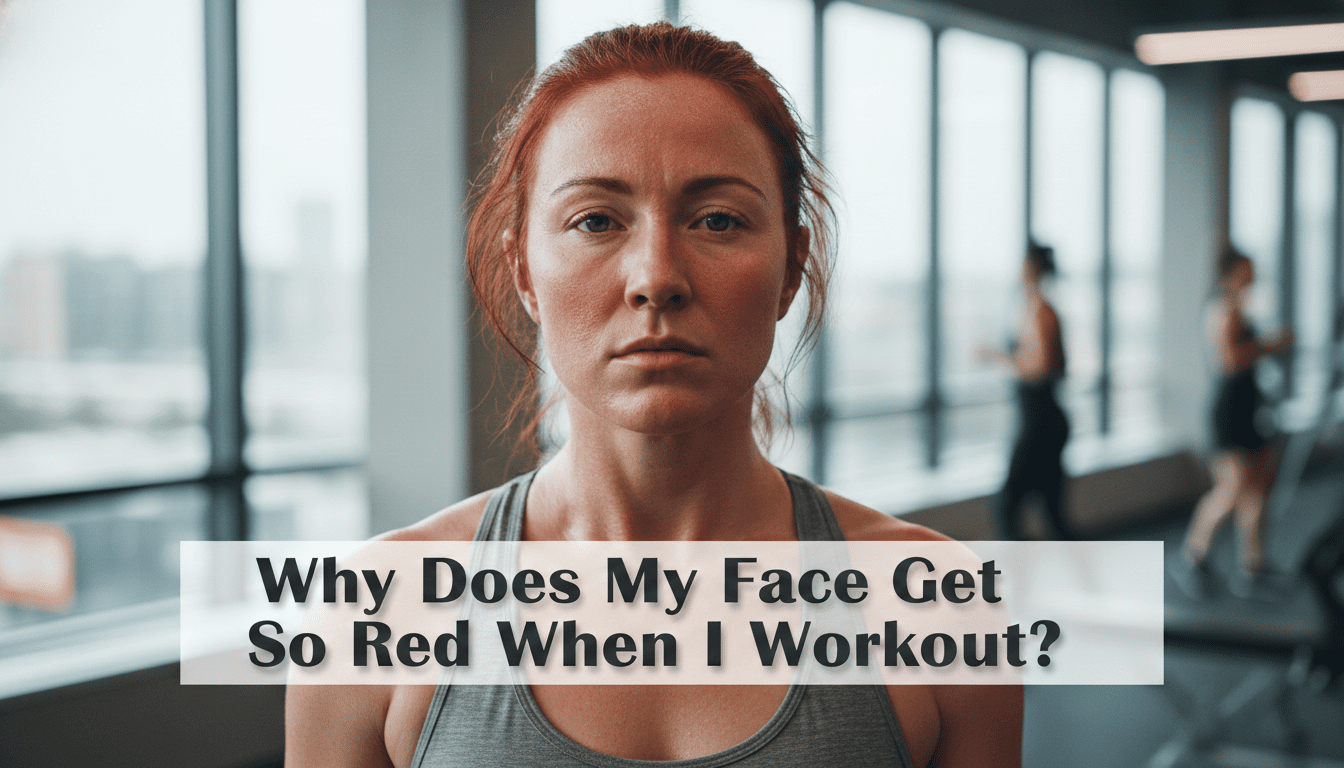
You finish a workout, look in the mirror, and your face looks bright red. It can feel surprising, even a little embarrassing. You may wonder if something is wrong.
Here’s the truth. In most cases, a red face during exercise is normal. Your body works hard to cool itself, and your skin shows it.
Still, you want to know why it happens. You also want to know when it’s a problem and how to reduce it.
In this guide, you’ll learn exactly why your face gets red when you work out, what affects it, and what you can do to manage it.
What Happens to Your Body During Exercise?
When you exercise, your body shifts into high gear.
Your heart beats faster. Your muscles demand more oxygen. Your body temperature rises.
To handle this, your body uses a cooling system.
First, your blood flow increases. Your heart pushes more blood to your muscles and your skin. Then your blood vessels expand. This process is called vasodilation.
Your body does this to release heat.
Your skin, especially your face, shows this change clearly. The extra blood near the surface makes your face look red.
At the same time, your body produces sweat. Sweat cools your skin as it evaporates.
So when you see a red face during exercise, you are seeing your body doing its job.
Main Causes of Red Face During Exercise
Several things work together to turn your face red during a workout. Let’s break them down.
Increased Blood Flow and Vasodilation
This is the main reason your face gets red.
When you exercise, your blood vessels expand. This allows more blood to flow near your skin.
That extra blood carries heat away from your body. It also brings oxygen to your muscles.
Your face has many small blood vessels close to the surface. Because of that, it shows redness faster than other areas.
So when your circulation increases, your face becomes the most visible sign.
Body Temperature Rise and Sweating
Exercise raises your internal temperature.
Your body reacts fast. It sends signals to cool you down.
One response is sweating. Another is pushing heat toward your skin.
That’s why you often notice both sweating and redness at the same time.
If your workout is intense or the environment is hot, your body works even harder. That means more blood flow and more redness.
Factors That Make Your Face Redder Than Others
You may notice that your face gets red faster than someone else’s. That does not mean something is wrong. Several factors affect how your skin reacts.
- Skin tone and sensitivity
If you have fair or sensitive skin, redness shows more clearly. Darker skin tones also flush, but you may not see it as easily. - Fitness level
If you are new to exercise, your body reacts more strongly. As your fitness improves, your body becomes more efficient at cooling. - Workout intensity and duration
High-intensity workouts push your body harder. More effort means more heat and more blood flow. - Environment
Hot weather, humidity, and poor airflow increase redness. Your body struggles more to cool itself in these conditions. - Hydration
If you don’t drink enough water, your body has a harder time regulating temperature. This leads to stronger flushing. - Genetics
Some people flush more easily than others. Your body’s natural response plays a big role.
When Is Facial Redness a Cause for Concern?
Most of the time, a red face during exercise is normal. But you should know when to pay attention. Here’s what to watch for.
If your redness fades within 30 to 60 minutes after your workout, you are fine. That’s a normal cooling response. If your face stays red for a long time, you should take a closer look. You should also pay attention to how you feel.
Redness becomes a concern when it comes with symptoms like:
- Dizziness
• Nausea
• Headache
• Rapid or irregular heartbeat
• Extreme fatigue
These signs point to heat exhaustion or overheating.
Some skin conditions also cause stronger redness.
Rosacea is one example. It causes flushing, visible blood vessels, and sometimes bumps on the skin. Exercise can trigger it.
Allergic reactions can also lead to redness, especially if you use new skincare products or supplements.
If your skin feels painful, burns, or becomes blotchy, you should not ignore it.
In short, normal redness fades and feels harmless. Problematic redness lingers and often comes with other symptoms.
How to Reduce Face Redness During and After Workouts
You can’t stop your body from cooling itself, but you can reduce how intense the redness gets.
Here’s what works.
Stay hydrated
Drink water before, during, and after your workout. Proper hydration helps your body control temperature better.
Choose the right environment
Work out in a cool, well-ventilated space. If you exercise outside, avoid peak heat hours.
Adjust your workout intensity
If your face turns extremely red, slow down. Build intensity over time instead of pushing too hard at once.
Use cooling methods
Splash your face with cold water after your workout. You can also use a cold towel to bring your temperature down faster.
Wear breathable clothing
Light, breathable fabrics help your body release heat more easily.
Take breaks
Short breaks during intense sessions help your body recover and prevent overheating.
Watch your skincare
Avoid harsh products before exercise. Use gentle cleansers and calming ingredients like aloe or niacinamide after your workout.
Cool down properly
Don’t stop suddenly. Gradually reduce your intensity so your body can return to normal without shock.
These steps help you manage redness without interfering with your workout.
Common Questions About Face Redness While Working Out
Why does my face stay red long after exercise?
Your body needs time to cool down. If the redness lasts longer than an hour, you may have sensitive skin or mild overheating. Improve your cooldown routine and hydration.
Is a red face a sign of being out of shape?
No. A red face shows that your body is working. Fitness level affects how fast you recover, not whether your face turns red.
Can I prevent facial flushing completely?
No. Your body needs this process to regulate heat. You can reduce it, but you can’t stop it completely.
Does redness mean I’m burning more calories?
No. Redness shows increased blood flow, not calorie burn. You burn calories based on effort and duration, not skin color.
Why does my face get red even during light exercise?
Your body reacts differently based on genetics, skin type, and environment. Even light activity can trigger flushing if your body heats up quickly.
Conclusion
Your face gets red during exercise because your body works to cool itself. Increased blood flow, rising temperature, and sweating all play a role.
In most cases, this is a healthy and normal response. Some factors make the redness stronger. Your skin type, fitness level, environment, and hydration all affect how your face looks during a workout.
You should only worry if the redness lasts too long or comes with symptoms like dizziness or nausea. You can reduce redness by staying hydrated, choosing cooler environments, and pacing your workouts. At the end of the day, a red face means your body is doing its job. Focus on how you feel, not how you look.
