You have probably heard this question before. Is marching band a sport? Some people say yes without hesitation. Others reject the idea right away.
This debate matters more than it seems. If you are a student, it affects how people view your effort. If you are a parent, it shapes how you support your child. If you are an educator, it influences funding and recognition.
Marching band demands time, discipline, and effort. Students practice for hours. They perform under pressure. They compete. Still, many people hesitate to call it a sport.
So where does the truth stand? Let’s break it down in a clear and honest way.
What Is Marching Band?
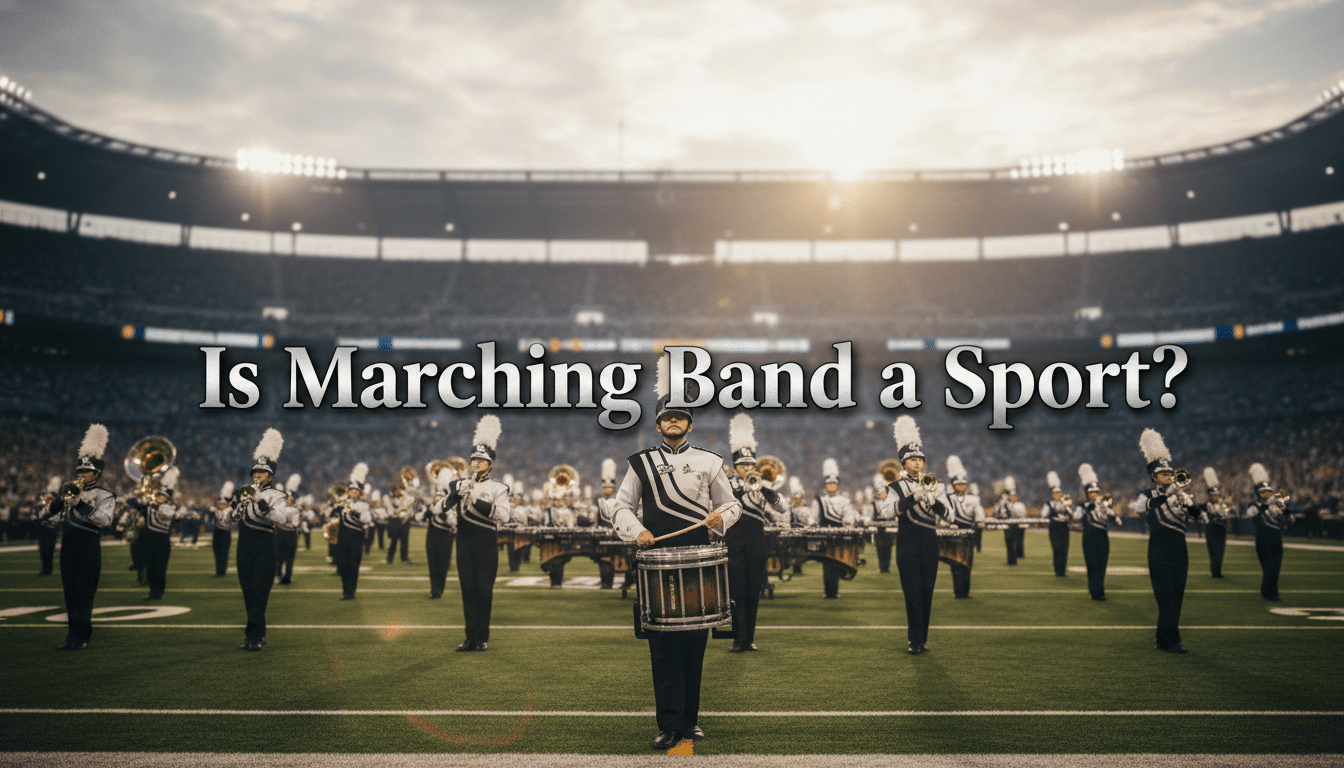
Marching band combines music and movement. You play an instrument while moving in formation on a field. You follow precise timing. You match your steps with others. You perform as one unit.
A typical marching band includes:
- Brass instruments like trumpets and trombones
- Woodwinds like clarinets and saxophones
- Percussion like drums and cymbals
- A color guard that adds visual elements
You do not just stand and play. You march. You turn. You change formations. You stay in sync with dozens or even hundreds of others.
Performances happen at football games, parades, and competitions. In competitions, judges score bands based on music, movement, and overall performance.
This is not casual activity. It requires planning, training, and execution.
What Defines a Sport? Key Criteria Explained
Before you answer the main question, you need a clear definition of a sport. Not everyone agrees on one definition, but most people accept a few core ideas.
A sport usually includes physical effort, skill, competition, and structured rules.
Let’s look at two key areas.
Physical Exertion and Athleticism
Sports require physical effort. You run, jump, lift, or move your body in demanding ways.
Marching band meets this standard. You carry instruments that can weigh several kilograms. You march for long periods. You maintain posture and control your breathing at the same time.
You also deal with weather. Heat, cold, and wind do not stop practice or performance.
Think about this. You march across a field while playing music perfectly. You control your steps, your sound, and your timing. That takes strength and endurance.
Many band members train like athletes. They build stamina. They stretch. They repeat drills until they get them right.
This is physical work. No question.
Competition and Skill
Sports involve competition. Teams face each other. Judges or scores decide the outcome.
Marching band also includes competition. Bands compete at regional and national levels. Judges score them based on performance quality.
You develop skills over time. You learn how to play better. You improve your marching technique. You master coordination.
You also learn discipline. You show up to practice. You follow instructions. You work as a team.
These are the same traits you see in sports teams.
Why Marching Band Can Be Considered a Sport
Now let’s look at the strong arguments in favor of calling marching band a sport.
- High physical demands
You move constantly during performances. You carry weight. You maintain form. Your body works hard from start to finish. - Competitive structure
Bands compete in organized events. Judges score performances. Rankings matter. - Team coordination
You depend on others. One mistake affects the whole group. You must stay in sync. - Rigorous practice schedules
You practice for hours each week. You attend rehearsals, camps, and events. The schedule matches many sports teams. - Risk of injuries
You deal with muscle strain, fatigue, and heat exhaustion. These risks are real and common.
If you compare this to sports like track or gymnastics, you see clear overlap. The effort, structure, and commitment look very similar.
Why Some People Say Marching Band Is Not a Sport
Not everyone agrees. Some people argue that marching band does not meet the full definition of a sport.
Here are their main points.
First, there is no direct physical competition. In most sports, you face an opponent. You try to score points against them. Marching band does not work that way. You perform for judges instead of competing head to head.
Second, the focus leans toward art. Music and visual design play a big role. People see it as a performance rather than a contest.
Third, scoring feels subjective. Judges evaluate style, precision, and creativity. This differs from sports where scores come from clear actions like goals or points.
Fourth, tradition shapes opinions. Many people grew up thinking of sports as games like football or basketball. They struggle to include something like marching band.
These arguments make sense. They highlight real differences. But they do not tell the whole story.
Marching Band vs Traditional Sports: Key Differences and Similarities
You get a clearer picture when you compare marching band to traditional sports.
Let’s start with similarities.
Both require teamwork. You work with others toward a shared goal. You rely on each person to do their part.
Both demand practice. You repeat drills. You improve skills. You build consistency.
Both involve performance under pressure. You compete in front of judges or crowds. You handle nerves and expectations.
Now look at the differences.
Traditional sports often involve direct competition. You face another team in real time. Marching band focuses on performance quality rather than direct opposition.
Scoring methods also differ. Sports use clear systems like goals or points. Marching band uses judged criteria.
Physical contact sets them apart too. Many sports include contact. Marching band does not.
Despite these differences, the core effort remains similar. You train. You perform. You compete.
The Physical and Mental Benefits of Marching Band
Marching band offers real benefits. You feel them in your body and your mind.
First, it improves fitness. You move constantly. You build endurance. Your heart and lungs get stronger.
Second, it builds discipline. You follow schedules. You commit to practice. You learn to push through fatigue.
Third, it teaches teamwork. You coordinate with others. You listen. You adjust.
Fourth, it sharpens focus. You track music, movement, and timing at once. This strengthens your ability to concentrate.
Fifth, it builds resilience. You make mistakes. You fix them. You keep going.
These benefits match what you gain from sports. In some cases, they go even further because you combine physical effort with artistic performance.
Is Marching Band Officially Recognized as a Sport?
This is where things get complicated.
Some schools treat marching band like a sport. They give it similar funding. They require attendance. They expect commitment.
Other schools classify it as an extracurricular activity. They group it with music or arts programs.
There is no universal rule. Different regions and institutions decide on their own.
Some organizations run large competitions. These events look and feel like sports tournaments. Bands travel, compete, and earn rankings.
Still, official recognition varies. This creates confusion and keeps the debate alive.
Conclusion: So, Is Marching Band a Sport?
Here is the honest answer. It depends on how you define a sport.
If you focus on physical effort, competition, and teamwork, marching band fits the definition. You train hard. You perform under pressure. You compete against others.
If you focus on direct competition and objective scoring, it looks different from traditional sports.
But one thing stays clear. Marching band demands real effort. It requires skill, discipline, and commitment.
So instead of arguing over labels, look at the work involved. When you do, you see the truth.
Marching band earns respect. Whether you call it a sport or not, it stands on the same level of dedication and challenge.
